

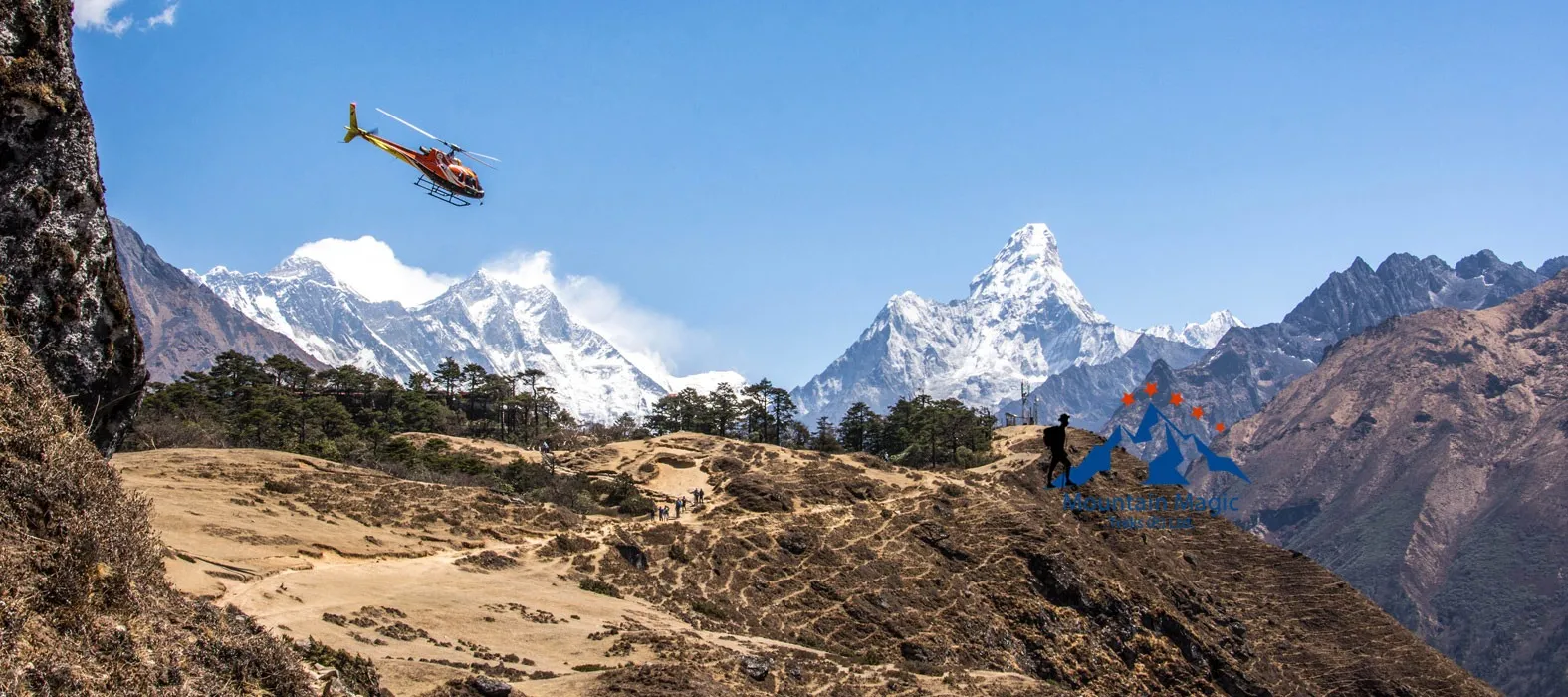
Not every traveler wants the same kind of mountain adventure.
Some people want to spend many days walking through the Himalayas. Others have limited vacation time but still want to experience Everest Base Camp. Some enjoy long hikes but would rather not spend several extra days walking back.
The Everest Base Camp Trek With Helicopter Return can suit travelers who want the experience of trekking into the Khumbu while making the return journey shorter.
The route still requires proper preparation, patience, and respect for high altitude. The helicopter does not remove the demanding part of reaching Everest Base Camp. It simply changes how you leave the mountains.
For Travelers With Limited Vacation Time
Long trekking holidays are not possible for everyone.
Work, family, business, and other responsibilities can make it difficult to spend several weeks in Nepal.
Save Days Without Skipping the Main Trail
A traditional Everest Base Camp journey usually requires walking back after reaching the highest point.
With a helicopter return, those return trekking days are removed.
This means travelers can experience the main approach to Everest Base Camp and then return much faster.
For someone working with a tight vacation schedule, that difference can be important.
For People Who Enjoy Walking
The helicopter does not mean the trip is a sightseeing flight.
The main approach is still completed on foot.
You walk through villages, cross suspension bridges, climb mountain trails, and spend days adjusting to higher elevations.
The Trail Remains the Main Experience
The route passes through important places such as Lukla, Phakding, Namche Bazaar, Tengboche, Dingboche, Lobuche, and Gorakshep.
Each section has a different feel.
The lower areas are greener, while the higher sections become colder and more rocky.
Walking allows you to notice these changes gradually.
For Travelers Who Dislike Repeating the Same Route
Some trekkers love the return walk.
Others find it less exciting because they have already seen the same trail.
After reaching Everest Base Camp and Kala Patthar, walking all the way back can feel like repeating a large part of the journey.
The Helicopter Adds Variety
The return flight provides a completely different experience.
Instead of seeing the mountains at walking speed, you see valleys, glaciers, villages, and ridges from above.
The landscape that took days to cross suddenly passes beneath you.
This change can make the final part of the trip feel fresh rather than repetitive.
For First-Time High-Altitude Trekkers
Being new to high-altitude trekking does not automatically mean you cannot attempt the route.
But it does mean preparation matters.
The itinerary includes acclimatization days in Namche Bazaar and Dingboche to help travelers adjust before going higher.
Take Acclimatization Seriously
Do not think of rest days as wasted time.
Your body needs time to adapt as the elevation increases.
Use these days for short walks, local exploration, good meals, hydration, and proper rest.
Moving slowly is often smarter than trying to prove how strong you are.
For Travelers Interested in Sherpa Culture
The mountains are only one part of the experience.
The trail passes through communities where Sherpa culture, Buddhism, trade, farming, tourism, and mountain work are closely connected.
Look Beyond the Main Trail
Namche Bazaar is a good place to observe local life.
Tengboche offers an opportunity to visit a well-known Buddhist monastery.
Dingboche shows what settlement looks like much higher in the mountains.
Take time to notice homes, prayer flags, monasteries, local shops, and daily routines.
The trip becomes richer when you see the region as a living community rather than only a trekking route.
For People Who Love Changing Landscapes
One of the strongest features of the Everest route is how quickly the environment changes.
At the beginning, you walk among trees and green hills.
Later, the landscape becomes open and rocky.
Eventually, glaciers and high mountain peaks dominate the view.
Notice the Transition
Do not wait until Everest Base Camp to start enjoying the scenery.
Look at the landscape every day.
The gradual transformation from lower valleys to high mountain terrain is one of the most memorable parts of the trek.
For Photographers
The route offers countless opportunities for photographs.
But carrying a camera does not mean you need to photograph everything.
Capture the Story, Not Just the Peaks
Take pictures of villages, bridges, prayer flags, mountain trails, and people when appropriate.
Photographs of ordinary moments often tell a better story than endless pictures of the same mountain.
Always ask permission before photographing people closely, especially in cultural or religious settings.
For Travelers Who Want a Different View of Everest
Reaching Everest Base Camp gives you one perspective.
Kala Patthar offers another.
The helicopter provides a third.
Ground and Air Tell Different Stories
On foot, you notice individual rocks, buildings, rivers, and trail sections.
From Kala Patthar, you see a wider mountain panorama.
From the helicopter, the entire landscape comes together.
This combination makes the Everest Base Camp Trek With Helicopter Return more varied than a journey experienced from only one viewpoint.
For People Who Prefer a Faster Finish
The final part of a long trek can be difficult.
Your legs may be tired, your body may want rest, and you may already be thinking about returning to normal life.
Finish Without Another Long Walking Section
The helicopter return means you do not have to spend several additional days retracing the trail.
After completing the main trekking objective, you can leave the high mountains by air.
It gives the journey a clear ending.
What Every Traveler Still Needs to Accept
The helicopter does not make altitude disappear.
It does not remove cold mornings.
It does not shorten the climb to Everest Base Camp.
And it does not guarantee that mountain weather will cooperate.
Preparation Still Matters
Before the trip, work on your walking endurance.
Bring suitable layers and comfortable footwear.
Stay hydrated.
Listen to your guide.
Pay attention to how your body feels.
Most importantly, do not treat serious altitude symptoms as something to ignore.
When Weather Changes the Plan
Mountain flights depend on conditions.
Clouds, wind, and visibility can affect helicopter operations.
Leave Space in Your Schedule
Avoid planning an important international connection immediately after the expected helicopter arrival.
Give yourself some extra time.
A flexible schedule is especially useful when traveling through high mountain areas where conditions can change quickly.
The Trip Is Bigger Than the Destination
Everest Base Camp is the main goal, but it should not be the only thing you remember.
You may remember the first suspension bridge.
You may remember the quiet streets of Namche.
You may remember a warm meal in Dingboche.
You may remember sunrise from Kala Patthar.
Or you may remember watching the trail disappear below you during the helicopter flight.
These experiences give the trek its character.
A Journey Worth Taking
The Everest Base Camp Trek With Helicopter Return is not a shortcut through the Himalayas.
It is a different way to experience the region.
You still earn the journey through days of walking, altitude changes, mountain villages, and demanding trails. The difference comes at the end, when the helicopter replaces the long return trek and gives you one final view from above.
For travelers who want the classic Everest approach but prefer a quicker way home, that combination can make a lot of sense.
Walk into the mountains.
Take time to understand the place.
Reach the high points.
Then leave with the entire Khumbu spread out below you.
FAQs
Is the trek suitable for first-time trekkers?
It can be suitable for prepared first-time trekkers, but the high altitude makes physical preparation and proper acclimatization important.
Does the helicopter replace the trek to Base Camp?
No. You still complete the main trekking route to Everest Base Camp and Kala Patthar on foot.
How many acclimatization days are included?
The listed itinerary includes acclimatization days in Namche Bazaar and Dingboche.
What is the highest point?
Kala Patthar is approximately 5,545 meters above sea level.
Why choose a helicopter return?
It removes the long return trek and gives travelers a different aerial perspective of the Everest region.
Can the return flight be delayed?
Yes. Weather and visibility can affect helicopter operations, so travelers should keep their plans flexible.